System Design
On this page4 sections
Overview
System design principles and patterns for building scalable applications.
Key Concepts
Architecture Patterns
- Microservices
- Monolithic
- Serverless
- Event-driven
Scalability
- Horizontal vs Vertical scaling
- Load balancing
- Caching strategies
- Database sharding
Reliability
- Fault tolerance
- Redundancy
- Monitoring
- Disaster recovery
Design Process
- Requirements gathering
- Capacity estimation
- System interface design
- Data model design
- High-level design
- Detailed design
- Scalability considerations
Related Topics
- Career Journey
- Technical Skills
- Interview Preparation
- Software Engineering
Further reading
Martin Fowler
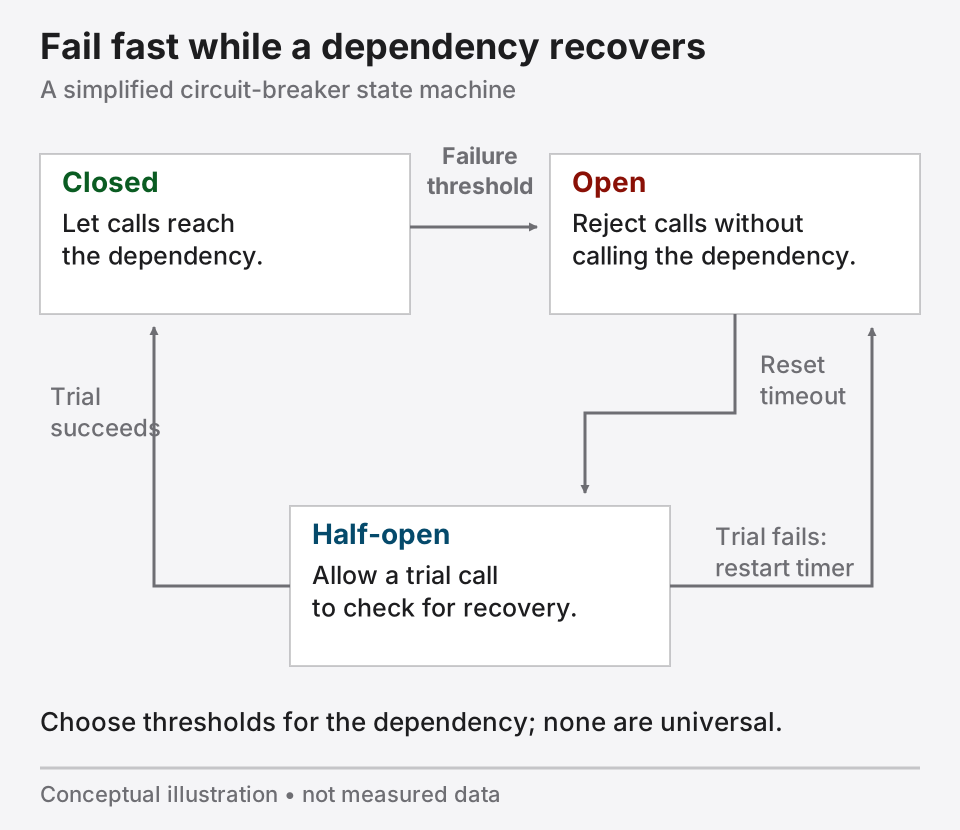
Circuit Breaker
Follow a circuit breaker’s closed, open and trial states to understand how it contains repeated failures.