Are Tomatoes Self-Pollinating?
On this page6 sections
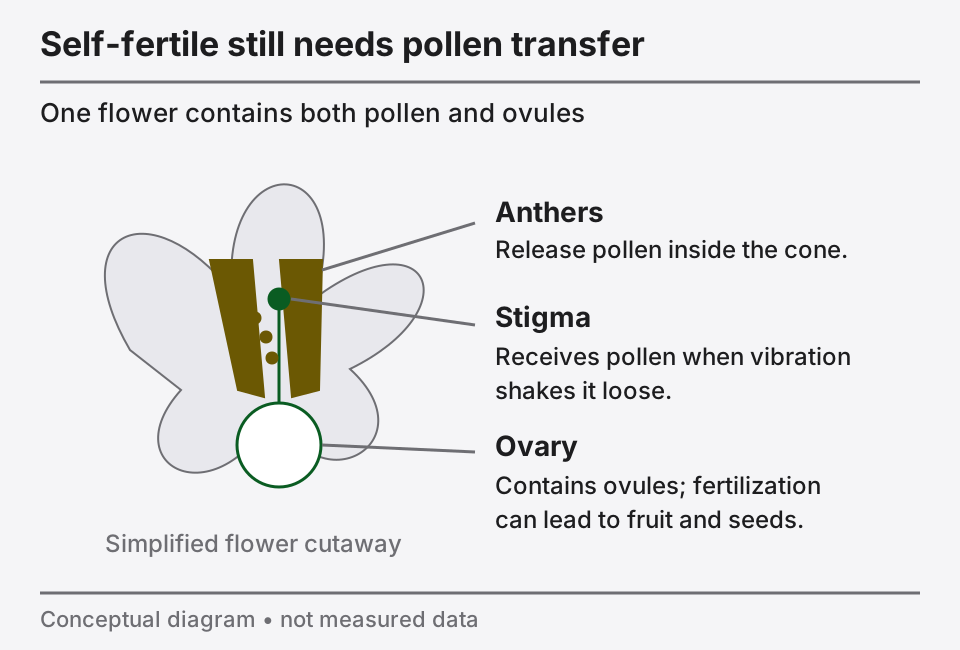
Yes. Tomatoes are self-pollinating plants. Each flower has both male parts (stamens that shed pollen) and a female part (the stigma and ovary that become the fruit). A single plant can set fruit without another variety nearby.
That is the short answer to "are tomatoes self pollinating" and "are tomato plants self pollinating." The longer answer is that self-fertile is not the same as "pollination happens by itself with no help." Pollen still has to move a short distance from the anthers onto the stigma.
Are tomato plants self pollinating?
Yes. A tomato plant does not need a second plant or a different variety in order to set fruit. Pollen from the same flower is enough. Isolation, containers, and indoor grow lights do not change that; they only change whether the flower gets shaken enough for pollen to land.
Do tomatoes self pollinate?
They do. Tomato flowers are perfect flowers: pollen from the same flower can fertilize that flower's ovary. You do not need a second plant, and you do not need bees, for fruit to form.
They are not wind-pollinated in the way corn is. The pollen is heavier and sticky. Outdoors, a breeze, a passing bee, or the plant shaking is usually enough. Indoors and in still greenhouses, flowers often open and drop without ever receiving pollen.
How do tomatoes pollinate?
- A flower opens. The anthers form a cone around the stigma.
- Ripe pollen sheds inside that cone.
- Vibration or a light knock sends pollen onto the stigma.
- If the stigma is receptive, pollen tubes grow and the ovary starts to swell into a tomato.
Wind and insect visits help by shaking the flower. Buzz-pollinating bees (bumblebees especially) are good at this, but they are a bonus, not a requirement. The plant is doing most of the work; the shake is what finishes the job.
Best window: mid-morning, once the flower is fully open and humidity is not so high that pollen clumps.
Why fruit still fails on self-pollinating plants
Self-pollinating does not mean every blossom becomes a tomato.
- No vibration. Indoor plants and sealed greenhouses often need a daily shake.
- Heat. Pollen often fails above about 85–90°F (29–32°C) in the day, or when nights stay very hot.
- Cold. Cool nights can slow pollen-tube growth.
- Humidity. Very dry air dries pollen; very wet air makes it clump.
- Stress. Irregular water, low light, or a nitrogen-heavy plant with few flowers.
Blossom drop with a dry stem scar usually means the flower was never fertilized. A tiny fruit that yellows and falls is a different problem (often calcium or water).
When to help pollination
Help when plants are flowering and you are not seeing fruit, especially indoors, on a patio with no breeze, or under glass.
- Gentle shake: tap the stake or the flower cluster once a day.
- Electric toothbrush: touch the stem behind an open flower for a second so the cone vibrates.
- Small brush: if you want to move pollen between flowers on the same plant, though that is rarely needed for ordinary slicing tomatoes.
Pollinate newly opened flowers every two or three days. Do not grind the blossom; over-vibrating bruises it.
Cherry types usually set more easily than large beefsteaks. Heirlooms can be fussier in heat. None of that changes the basic fact: tomato plants are self-pollinating.
Related Notes
- Gardening Tips - General gardening principles
- Raised Beds - Growing tomatoes in raised beds
- Plants Index - Other plant notes
- Gardening - Complete gardening knowledge
Further reading
Gerald Brust, University of Maryland Extension
Tomato pollination and how to increase it in high tunnels
Understand how flower structure, movement and growing conditions affect tomato pollination.