Communication Skills
On this page4 sections
Communication Skills are essential for effective interaction and collaboration in both personal and professional settings.
Core Components
Verbal Communication
- Clarity and conciseness
- Active listening
- Tone and pace
Non-Verbal Communication
- Body language
- Eye contact
- Facial expressions
Written Communication
- Grammar and style
- Email etiquette
- Report writing
Application
-
Professional Settings
- Team collaboration
- Client interactions
- Presentation delivery
-
Personal Development
- Relationship building
- Conflict resolution
- Self-expression
Best Practices
- Practice active listening
- Be clear and concise
- Adapt to your audience
Related Resources
- Leadership Skills - Communication in leadership contexts
- Interview Presence - Communication during interviews
- Networking - Building professional relationships
- Professional Writing Hub - Written communication excellence
- Interview Preparation Hub - Interview communication skills
- Presentation Skills - Public speaking abilities
Further reading
Agency for Healthcare Research and Quality, archived by the U.S. Government Publishing Office
TeamSTEPPS Pocket Guide — Check-Back
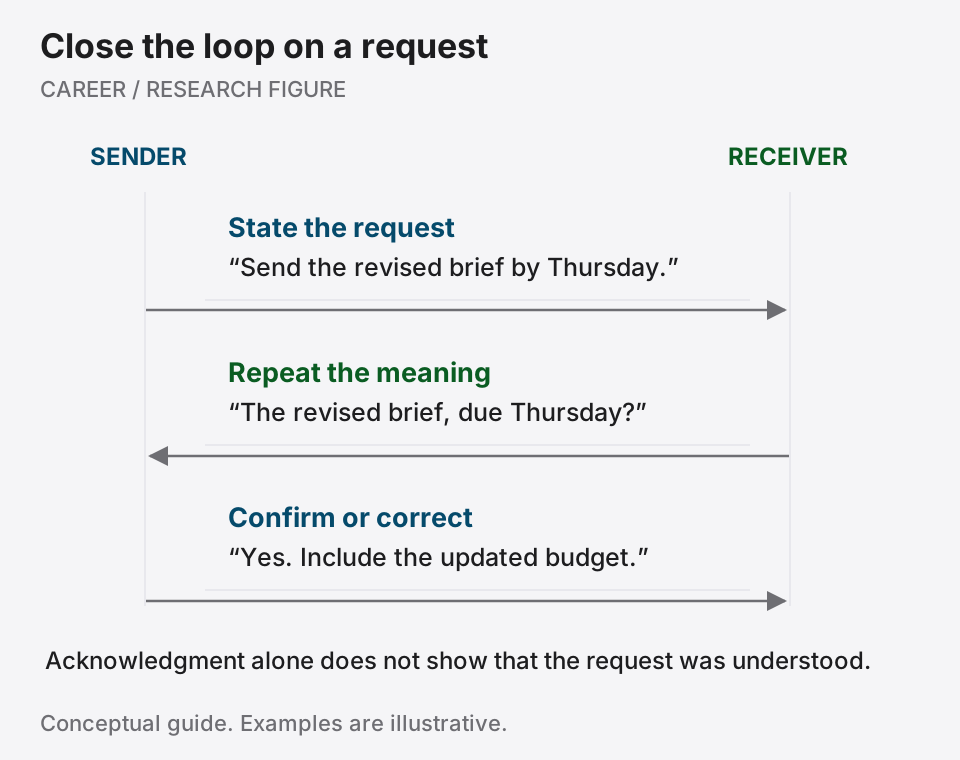
Use a check-back to confirm that the listener understood the intended message.
Connected notes
- Behavioral Interviews
- Content Strategy
- Interview Preparation Hub
- Interview Presence
- Leadership Skills
- Leadership and Communication Synthesis
- Networking
- Professional Writing Hub
- Daring Greatly: How the Courage to Be Vulnerable Transforms the Way We Live, Love, Parent, and Lead
- The Body Keeps the Score: Brain, Mind, and Body in the Healing of Trauma
- The Courage to Be Disliked: The Japanese Philosophy That Will Transform Your Life
- Remote Work Notes
- Skills Development Hub