Behavior Change
Behavior change is the process of modifying or transforming one's actions, habits, or patterns of conduct. It is a fundamental aspect of Personal Development and often involves conscious effort and strategic approaches to achieve lasting improvements in one's life.
Key components of effective behavior change:
- Self-awareness: Recognizing current behaviors and their impacts
- Motivation: Identifying compelling reasons for change
- Goal setting: Establishing clear, achievable objectives
- Action planning: Developing specific strategies to implement change
- Habit formation: Creating new routines using frameworks like Atomic Habits
- Environmental design: Modifying surroundings to support desired behaviors
- Accountability: Tracking progress and seeking support from others
- Resilience: Overcoming setbacks and maintaining long-term commitment
Strategies for successful behavior change:
- Start small with atomic changes
- Use positive reinforcement and reward systems
- Practice mindfulness and self-reflection
- Leverage social support and accountability partners
- Implement Motivation Techniques to maintain momentum
- Regularly review and adjust goals and strategies
Quote
"We are what we repeatedly do. Excellence, then, is not an act, but a habit." - Aristotle
Books That Explore Behavior Change
- Atomic Habits: An Easy & Proven Way to Build Good Habits & Break Bad Ones - James Clear's systematic approach to habit formation
- Mindset: The New Psychology of Success - Carol Dweck on how beliefs shape behavior
- The Courage to Be Disliked: The Japanese Philosophy That Will Transform Your Life - Choosing to change despite past
- Grit: The Power of Passion and Perseverance - Angela Duckworth on sustaining behavior change
- Daring Greatly: How the Courage to Be Vulnerable Transforms the Way We Live, Love, Parent, and Lead - Brené Brown on courage to change
Related concepts:
- Atomic Habits
- Self-Improvement
- Growth Mindset
- Cognitive Behavioral Therapy
- Book Learning Synthesis - How these concepts interconnect
Further reading
Michie, van Stralen and West, Implementation Science
The behaviour change wheel: A new method for characterising and designing behaviour change interventions
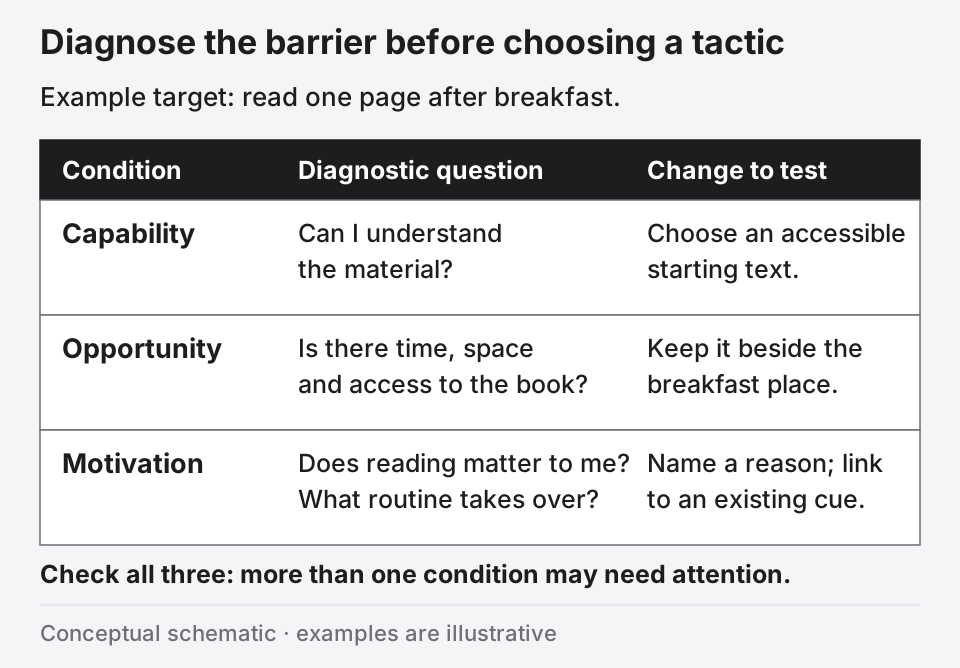
Diagnose whether capability, opportunity or motivation is limiting a behavior before selecting a tactic.
Connected notes
- Atomic Notes
- Book Learning Synthesis
- Atomic Habits
- Knowledge Management and Personal Growth Synthesis
- Leadership and Communication Synthesis
- Knowledge Map
- Motivation Techniques
- Nobody is Watching
- Personal Development
- Atomic Habits: An Easy & Proven Way to Build Good Habits & Break Bad Ones
- Daring Greatly: How the Courage to Be Vulnerable Transforms the Way We Live, Love, Parent, and Lead
- Feel-Good Productivity: How to Do More of What Matters to You
- Grit: The Power of Passion and Perseverance
- Mindset: The New Psychology of Success
- The Body Keeps the Score: Brain, Mind, and Body in the Healing of Trauma
- The Courage to Be Disliked: The Japanese Philosophy That Will Transform Your Life
- Hobbies & Interests